Sub-Rural Fringe

Summary of Dominant Character
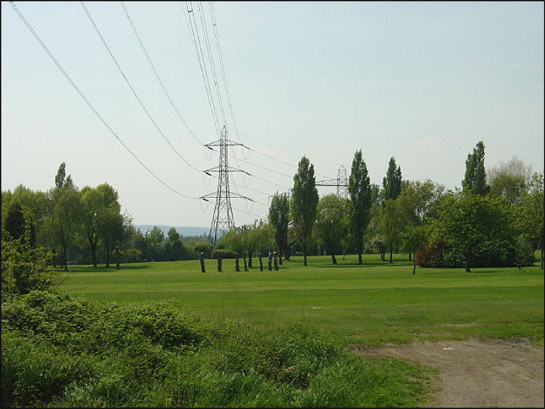
Figure 1: Phoenix Golf Course, Rotherham.
© Alan Murray-Rust. Licensed for use under a creative commons licence - http://www.creativecommons.org/licenses/by-sa/2.0/
The historic character of this zone is defined by an open landscape with strong rural indicators such as open space, relict field patterns and boundaries, high levels of woodland and a general absence of housing or active industry. However, the influence of nearby or surrounding urban settlement has fundamentally altered the character of this land. Some character areas in this zone, for example ‘Phoenix Golf Club’, and ‘Roundwood, Rawmarsh Recreational’ are completely encircled by urban development.
All these areas have previously been dominated by agricultural or industrial character (sometimes both), but these activities have now generally ceased and the management of these areas is generally concerned with maintaining their amenity value as green spaces, whilst encouraging opportunities for recreation and biodiversity. The character areas within this zone feature a wide variety of character units dating to many different periods, ranging from ancient woodlands to 20th century sports provision. As a result, this zone is often one of character transition, areas of sub-rural character blending or interlocking with adjacent urban landscapes.
Relationships with Adjacent Character Zones
As this zone is one directly produced by the processes of suburbanisation, it is intrinsically linked and closely geographically related to settlement zones and the ‘Industrial’ character zone as well.
Inherited Character
Of the current landscapes that make up this zone, the first to pass from purely rural use was the land at Phoenix Golf Course and the associated sports fields. This course was established in 1932 by workers from the Templeborough works of Steel Peech and Tozer (Phoenix Golf Club 2008), who asked permission of the management of the works to develop an area of scrubland and arable farmland. The characterisation data has recorded no legibility of earlier landscapes here, beyond the presence of some early 20th century cottages.
A later development, also related to the provision of recreational facilities for workers in the steel industry, was the redevelopment of the land within the ‘Roundwood, Rawmarsh Recreational’ character area. Between 1967 and 1983 an area of strip enclosure countryside was converted to a golf course and sports fields. The site is between the former British Steel complex of Aldwarke / Roundwood and dates to a period in which there was considerable investment in both sites following the 1967 nationalisation (Munford 2003, 86-90). The characterisation data records fragmentary legibility of earlier field boundaries across this character area.
There is also fragmentary preservation of boundary features at Valley Park and East Herringthorpe Cemetery, both created in the 1970s by Rotherham MBC to cater for the growing southern suburbs of Rotherham.
Later Characteristics
These landscapes are now reaching a mature state and are likely to remain generally stable for some time as, despite the contraction of the local industrial base, they continue to serve large populations with valued amenities.
Character Areas within this Zone
Map links will open in a new window.
- Phoenix Golf Course (Map)
- Roundwood, Rawmarsh, Recreational (Map)
- Round Wood, Thrybergh (Map)
- Valley Park and East Herrignthorpe Cemetery (Map)
Bibliography
- Phoenix Golf Club
- 2008 Club History [online]. Available from: www.pheonixgolfclub.co.uk/index.html [accessed 18/06/2008].